Choosing a front door colour can feel like a significant decision, but the real dilemma often begins once the paint has dried. Should you pair it with traditional brass, create contrast with black iron or choose a cooler finish such as chrome or satin nickel? The wrong combination can make expensive door furniture disappear into the background, clash with the property’s character or leave the entrance looking unfinished. The right pairing, however, brings the entire scheme together and turns a collection of practical fittings into a confident and welcoming first impression.
Front door hardware encompasses every visible and functional detail, from handles, door knockers and centre knobs to letter plates, escutcheons, bell pushes and house numbers. Each piece contributes to the overall character of the entrance, so colour should never be considered in isolation. A successful combination takes account of contrast, undertone, architectural style and the visual weight of the chosen fittings.
Matching your front door hardware with your door colour offers practical as well as decorative advantages. Planning the complete arrangement makes it easier to maintain a consistent finish, select products that complement one another and ensure that the most important features receive the attention they deserve. It can also help online customers compare suitable designs, dimensions and exterior finishes before committing to a purchase.
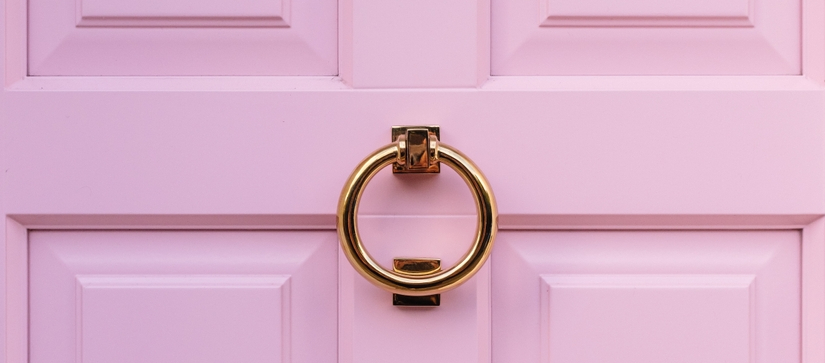
Without a clear plan, individually attractive pieces can compete with one another or become lost against the painted surface. A black door knocker may have little impact on a black door, while highly polished brass could feel too formal for an understated contemporary entrance. In this TBKS guide, we'll help you compare the most effective combinations and choose the front door furniture that suits your door colour, property and personal style.
Before comparing individual finishes, consider whether you want the door hardware to contrast with the door or blend gently into it. Strong contrast draws attention to the shape of a knocker, handle or letter plate, making it ideal for distinctive or decorative pieces. A lower contrast combination creates a calmer appearance, but fine details can become less visible from the street. The age and architecture of the property should also influence the decision, since traditional ironmongery can reinforce the character of a period home while streamlined fittings may better suit a contemporary façade.
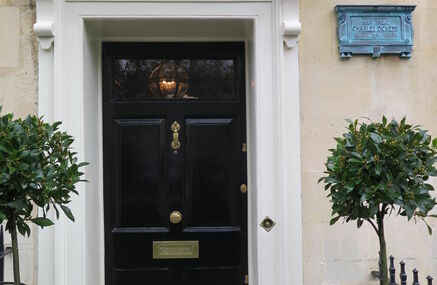
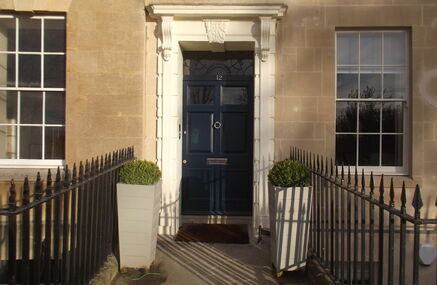
Neutral front doors provide an adaptable background, but each colour creates a different effect. Black doors look particularly distinguished with polished or aged brass because the warm metal remains clearly visible against the dark surface. White and cream doors can carry almost any finish, although the choice determines whether the result feels crisp, traditional or softly decorative. Grey doors require closer attention to undertone, as a cool silver-grey may favour nickel or chrome while warmer greige and taupe shades are usually enhanced by brass or bronze.
Blue and green are enduring front door colours because they can appear traditional, contemporary or rural depending on their depth and undertone. Navy blue forms a particularly handsome partnership with polished brass, while softer blue-grey shades often suit nickel, chrome and pewter. Deep forest green has a natural affinity with antique brass and bronze, giving the entrance a rich, established quality. Sage and muted olive doors can support either warm metalwork or black iron, making them versatile choices for cottages and modern country homes alike.
A brightly coloured front door already commands attention, so its hardware should support the colour rather than compete with it. Deep red, burgundy and oxblood shades generally respond well to aged brass, polished brass and bronze, all of which reinforce their warmth. Yellow, ochre and burnt orange can also suit brass, but a black finish often provides a cleaner visual boundary and prevents the scheme from becoming excessively warm. For bolder contemporary colours, simplicity is valuable, and one consistent finish will usually look more accomplished than several decorative metals.
Natural timber has its own colour variation, grain and depth, so door furniture should enhance these qualities rather than obscure them. Warm woods such as oak, mahogany and walnut have an established relationship with brass, bronze and black iron, making these finishes reliable choices for traditional entrances. Lighter timbers can also work with satin nickel or contemporary black fittings, particularly on modern homes. Because timber changes in appearance according to its finish and exposure to sunlight, samples should be viewed against the actual door whenever possible.
Even the best colour and finish pairing can look disjointed if the individual fittings do not relate to one another. Your visible front door furniture may include a handle or centre knob, door knocker, letter plate, escutcheon, bell push, house numbers and protective finger plate. These items do not always need to come from one collection, but their finish, proportions and decorative style should feel connected. Planning the entire arrangement before purchasing also helps you check measurements, fixing positions and compatibility with existing holes in the door.
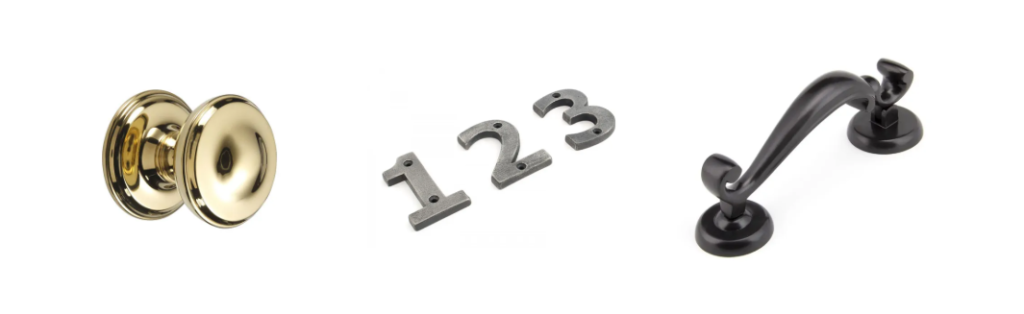
The most successful front doors are not necessarily those with the boldest colours or the brightest hardware. They are the ones where the door colour, metal finish, property style and proportions of each fitting have been considered together. At TBKS, we offer an elegant collection of premium quality front door furniture, with both traditional and contemporary styles available in a choice of complementary finishes. We have a statement-making selection of door knockers, distinctive door numbers and beautifully proportioned centre door knobs, alongside letter plates, bell pushes, cylinder pulls and other coordinating accessories.
Whether you are adding warmth to a dark painted door with polished brass, complementing natural timber with black iron or creating a cleaner contemporary entrance, the right door fittings can bring the entire scheme together. Many of our products are available in a variety of finishes, making it easier to create a coordinated appearance across every visible detail. Explore our front door furniture collection to find hardware that complements your chosen colour, respects the character of your property and gives your home a polished and memorable first impression.